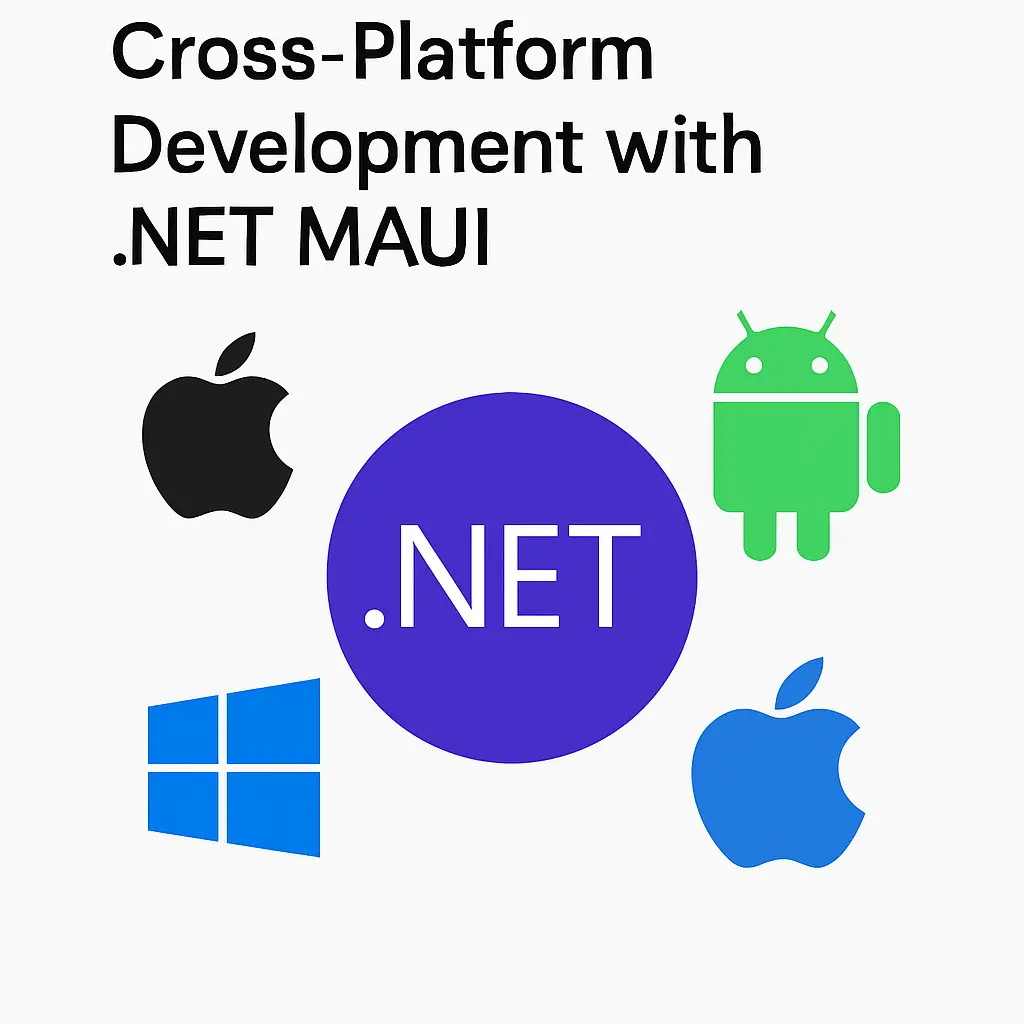
.NET MAUI has emerged as a revolutionary technology in mobile application development, enabling developers to build native apps for multiple platforms using a single codebase. As the demand for cross-platform solutions grows, understanding the advantages, features, and appropriate strategies for leveraging .NET MAUI is crucial for both developers and businesses. This article explores its core concepts, practical applications, and the selection of the right development partner.
The Evolution and Capabilities of .NET MAUI in Mobile Development
.NET Multi-platform App UI (.NET MAUI) harnesses the power of Microsoft’s ecosystem to streamline cross-platform app development. Born as the evolution of Xamarin.Forms, .NET MAUI extends its reach to Android, iOS, macOS, and Windows, offering a true single codebase solution. This creates unprecedented opportunities for organizations seeking cost-effective, scalable, and robust mobile applications without compromising on user experience or platform-specific features.
Unified Development Experience
One of the biggest advantages of .NET MAUI mobile development is the unification it brings to the development lifecycle. Developers work within a consistent API, utilizing the full potential of C# and the .NET ecosystem. This unified approach results in significant benefits:
- Consistent Logic and UI: Write business logic and user interface code once, and deploy it across multiple operating systems without extensive rewriting.
- Native Performance: MAUI applications compile to native binaries, seamlessly integrating with platform-specific APIs, resulting in high performance and smooth interactions on every device.
- Powerful Tooling: Developers can leverage Visual Studio’s comprehensive debugging, testing, and deployment tools, dramatically reducing development time and increasing productivity.
Access to Native Features
In the past, cross-platform frameworks often created a “lowest common denominator” effect, limiting access to native APIs or producing subpar user experiences. .NET MAUI, however, provides a vast bridge to native device functionalities through a set of platform-specific services. Sensor access, camera usage, notifications, geolocation, and even platform-specific UI tweaks can be handled smoothly with just a few lines of code.
Modern UI/UX and MVU Architecture
The flexibility of MAUI extends to interface design. The inclusion of the MVU (Model-View-Update) pattern alongside the traditional MVVM (Model-View-ViewModel) allows for modern declarative UI construction, akin to frameworks like React Native or Flutter. Developers can create visually stunning interfaces that adapt dynamically to different form factors, delivering a seamless user experience whether on mobile devices, tablets, or desktops.
Seamless Updates and Maintenance
Long-term maintainability is a crucial factor for businesses with evolving product roadmaps. The consolidated codebase enabled by .NET MAUI ensures quicker bug fixes, smoother updates, and a reduced chance of platform-specific fragmentation. Teams no longer need to synchronize feature releases individually for each platform—one update can propagate everywhere.
Comprehensive .NET Library Support
Having access to the vast .NET Standard library ecosystem significantly extends MAUI’s functionality, allowing for easy integration with cloud services, backend APIs, data storage solutions, and third-party packages. Security, accessibility, and scalability benefitting from the maturity and robustness of .NET are at the forefront of every project.
Successful Applications and Use Cases
Modern businesses seek to reach users on any device efficiently. Retail, finance, healthcare, and productivity organizations increasingly turn to MAUI as a single solution for mobile and desktop applications. For instance, a banking app might leverage .NET MAUI for iOS, Android, and Windows desktop, sharing authentication logic and business modules while tailoring user interface layers for optimal device-specific interaction.
Companies running internal tools or customer-facing apps with frequently changing requirements benefit from rapid prototyping, shared resources, and reduced maintenance overhead. This adaptability strengthens time-to-market efforts and allows seamless scaling as user bases and feature sets grow.
Selecting the Right .NET MAUI Development Partner
The Role of Expertise and Experience
Adopting .NET MAUI isn’t just a technical decision; it is a strategic move that can impact a product’s success, cost, and long-term maintainability. When a business lacks in-house skills, partnering with a proven net maui development company becomes essential. The right partner brings years of domain expertise, hands-on experience across industries, and a robust understanding of best practices for cross-platform development.
Evaluating a MAUI Development Partner
Not all vendors offer the same level of capability. Here’s what to look for:
- Portfolio and Case Studies: Established vendors should demonstrate successful delivery of MAUI projects across a spectrum of business sectors, preferably matching the client’s industry or app category.
- Process Maturity: Effective development companies have standardized processes for requirements gathering, agile sprints, CI/CD integration, code reviews, and security audits, ensuring predictable results and minimal risk.
- UI/UX Expertise: Since user experience is a key differentiator in mobile applications, a strong design team familiar with both MAUI’s capabilities and platform-specific design languages is critical.
- Post-Launch Support: The job doesn’t end at launch. Ongoing maintenance, rapid bug fixes, and regular feature enhancements are crucial for keeping the app competitive and secure.
Collaboration and Communication
Even the best technical teams can fall short if collaboration is lacking. The ideal .NET MAUI partner maintains transparent communication, provides regular updates, and invites client feedback at every stage. Agile methodologies are particularly beneficial in MAUI projects, enabling businesses to see progress clearly, suggest changes, and remain agile themselves.
Addressing Key Development Challenges
While MAUI is a powerful framework, cross-platform mobile development is not without challenges. Variations in device form factors, OS-specific behaviors, and third-party service integrations can introduce complexity. An experienced MAUI company proactively addresses these issues, leveraging established patterns for code reuse, rigorous testing on physical devices, and abstraction layers to minimize divergence across platforms.
Integrating Modern Practices
The landscape of mobile development is rapidly evolving, with expectations for lightning-fast performance, high security, and seamless cloud integration. Elite MAUI partners constantly update their knowledge, implementing the latest advancements in .NET, following secure coding practices, and exploring new integrations (such as AI-driven features, cloud analytics, or offline-first architectures).
Cost and Time-to-Market Considerations
Choosing .NET MAUI—and the right partner—can dramatically affect the economics of an app project. The unified codebase cuts development costs by reducing duplicated effort, and the fast pace of MAUI’s tooling allows for shorter release cycles. However, transparency in pricing, accurate milestone delivery, and avoiding vendor lock-in practices are crucial for a successful partnership.
Long-Term Strategic Value
Businesses investing in .NET MAUI are positioning themselves for long-term agility. As technology and user expectations evolve, the framework’s flexibility, growing ecosystem, and Microsoft’s ongoing support ensure applications remain future-proof. The presence of a passionate developer community also accelerates issue resolution and knowledge sharing, further enhancing the value proposition.
Conclusion
.NET MAUI is transforming how organizations approach cross-platform mobile development, unifying app logic and UI across diverse devices while retaining native performance. By leveraging MAUI’s robust ecosystem and choosing the right expert partner, businesses can bring sophisticated, future-ready mobile and desktop applications to market swiftly and efficiently. The benefits span from faster development cycles to reduced costs, ensuring maximum return on digital investments.